
Categories
- Articles

- Blogs and Op-eds
- News
- Quora Questions and More
Related Products

Vijay Diwas 1971 Poster

Related Books
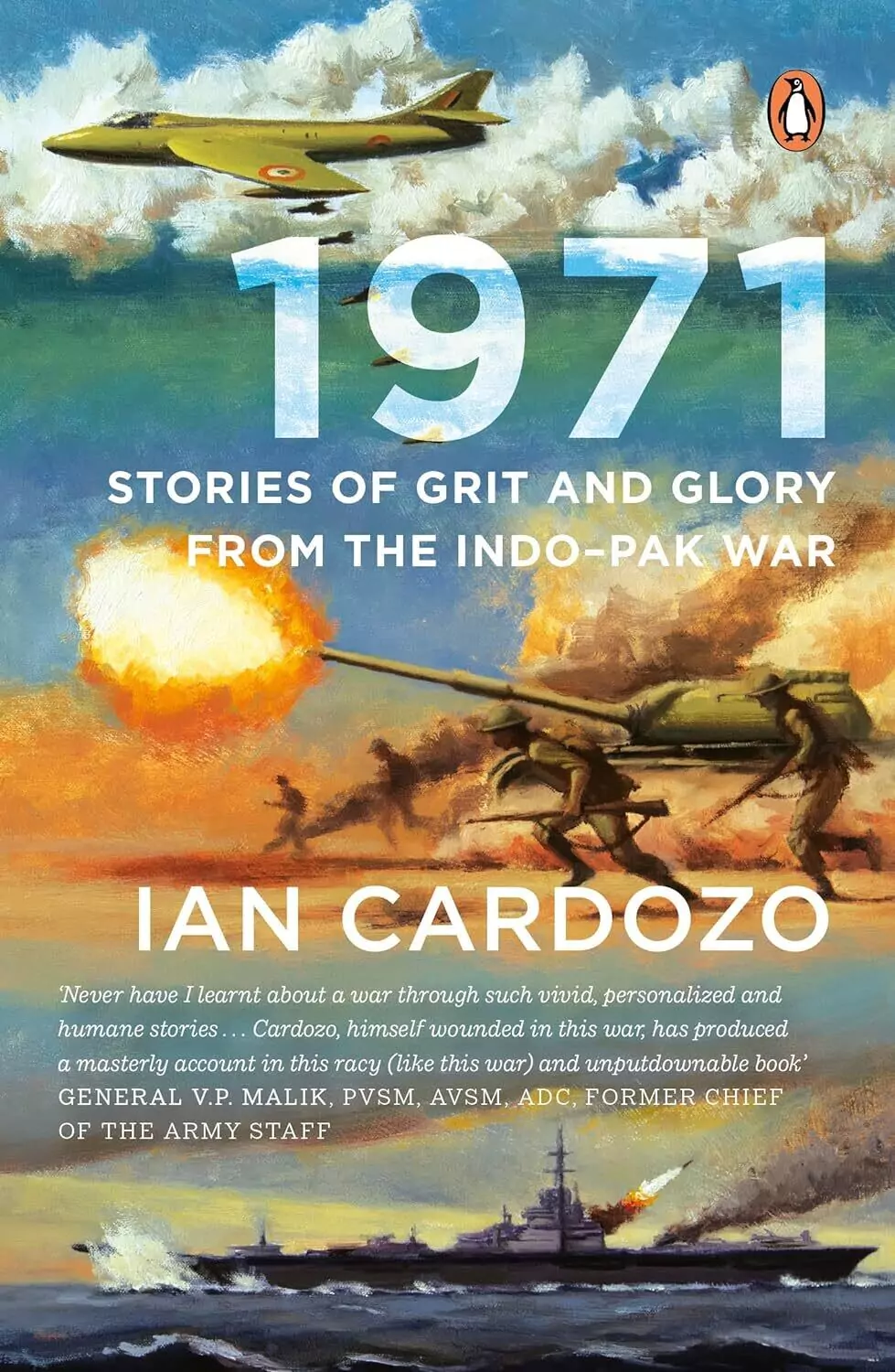
1971 Stories of Grit and Glory from the Indo-Pak War


Vijay Diwas 2025: Why 16 December Marks India’s Biggest Military Victory Against Pakistan
 Vijay Diwas 2025
Vijay Diwas, observed every year on 16 December, stands as one of the most defining milestones in India’s military history. On this day in 1971, the Indian Armed Forces achieved a decisive and unparalleled victory over Pakistan, reshaping the geopolitical map of South Asia forever. The surrender of over 93,000 Pakistani troops signalled not just India’s strategic brilliance but also the birth of a new nation, Bangladesh.
As we commemorate Vijay Diwas in 2025, we look back at the gritty battles, daring operations, and supreme sacrifices that powered India’s victory 54 years ago. It is a day to salute the warriors, leaders, and units whose courage and competence ensured that the tricolour flew high on the battlefield.
How Did It All Begin in 1971
Before India entered the full-scale 13-day war with Pakistan in December 1971, a series of political, humanitarian, and military developments had already set the stage for one of the most decisive conflicts in South Asian history.
Here’s a timeline of those events and how the Indian military showcased its preparedness, strategic clarity, and remarkable strength through them all:
Political Turmoil in East Pakistan (March 1971 Onward)
The 1971 crisis began when Pakistan refused to hand over power to Sheikh Mujibur Rahman despite his sweeping election victory in the East. What should have been a peaceful transfer of authority turned into a violent military clampdown. Operation Searchlight—Pakistan’s brutal campaign of arrests, massacres, and intimidation—was launched to crush Bengali nationalism by force.
As East Pakistan descended into chaos, Awami League leaders escaped to India and formed a government-in-exile, while Bengali officers and civilians took up arms as the Mukti Bahini. Backed by the Indian military, this growing guerrilla force began hitting Pakistani positions, sabotaging supply lines, and steadily eroding the enemy’s control—long before the formal war even began.
The Battle of Garibpur (20–21 November 1971)
 [Credit: IA Southern Command]
This was the first significant clash between India and Pakistan, demonstrating the Indian military’s strength, precision, and readiness for the larger conflict about to unfold. At Garibpur, troops of 14 Punjab and 45 Cavalry launched a bold pre-emptive move, establishing a forward position that caught Pakistan completely off guard. In the fierce battle that followed, Indian forces destroyed Pakistani tanks, neutralised enemy troops, and held their ground with remarkable determination.
Supported by the Indian Air Force, the victory at Garibpur sent a clear message even before the formal war began: India was fully prepared, confident, and capable of dominating the battlefield.
Also read: Garibpur 1971: The Battle That Paved India’s Path into East Pakistan
The Battle of Boyra (22 November 1971)
The IAF heroes of Boyra Dog-Fight were the pilots of 22 Sqn, operating from DumDum - Flt Lt Roy Massey VrC, Fg Offr Donald Lazarus VrC, Flt Lt S Saures & Flt Lt MA Ganapathy VrC & the Fighter controller was Flt Lt KB Bagchi. pic.twitter.com/dS5aEGuM9I
— Indian Air Force (@IAF_MCC) November 22, 2018
The very next day, the conflict shifted to the skies. On 22 November, three Pakistani Sabres attempted to strafe Indian positions near Boyra. In response, four IAF Folland Gnats scrambled to intercept them, leading to a sharp, high-speed dogfight. This encounter marked the first air combat victory of the 1971 conflict in the East and established firm Indian air superiority over the Garibpur–Jessore sector.
Also read: The Boyra Boys: When the Indian Air Force Drew First Blood in 1971
The Battle of Hilli
#IndianArmy #AlwaysVictorious
— ADG PI - INDIAN ARMY (@adgpi) December 13, 2019
Battle of Hilli was inarguably the most intensely fought battle of Indo-Pak War of 1971. Battle of Hilli is well considered as a classic example of sheer guts, sacrifice & determination to win against all odds.#PakArmy to capitulate in a few days pic.twitter.com/UGU7odEIqk
The Battle of Hilli was one of the toughest and bloodiest engagements before the full-scale war began. From 22–24 November, Indian soldiers of 202 Mountain Brigade advanced against deeply fortified Pakistani defences to open the road to Bogra. They moved forward under relentless fire, losing comrades, running low on ammunition, and fighting through mud, mines, and darkness.
Even when forced to pull back, they did not break. Reinforced and resolute, the troops returned to the battlefield, standing firm against counterattacks. By 24 November, Morapara fell—won through sacrifice, courage, and the unyielding spirit of the Indian Army on the Eastern front.
1971 Indo-Pak War: Thirteen Days to Indian Military Victory
On the evening of 3 December 1971, the Pakistan Air Force launched coordinated air strikes on Indian airfields across the western front under Operation Chengiz Khan. This became the tipping point for India. In response, India launched Operation Trident on 4 December, a decisive naval counter-attack to cripple Pakistan's Karachi harbour. This marked the official commencement of the war.
The Battle of #Longewala was one of the first major battles in the Western Sector during #IndoPakWar1971. The battle goes down in the annals of military history as a classic case of human resolve and motivation in the face of extremely heavy odds.#SwarnimVijayVarsh#IndianArmy pic.twitter.com/3IxakU0khW
— ADG PI - INDIAN ARMY (@adgpi) April 13, 2021
In coordination, the Indian Air Force also responded swiftly, striking Pakistani air bases and gaining early air superiority. At the Battle of Longewala in Rajasthan’s desert, IAF close air support proved decisive. Though Indian troops were heavily outnumbered by Pakistani tanks, precise air strikes destroyed enemy armour and halted the advance, turning the battle decisively in India’s favour.
Following Operation Trident, Operation Python was launched on 8 December 1971, closing in on Karachi fleet & oil reserves yet again. Through this operation, over half of Karachi’s fuel reserves were destroyed. Pakistan’s western fleet was paralysed and confined to harbour. These twin naval strikes ensured India’s absolute maritime dominance and removed any possibility of naval interference in India’s wider war effort.
On the eastern front, Indian Army formations advanced on multiple axes, bypassing heavily defended positions and isolating Pakistani units. The Mukti Bahini’s guerrilla operations further disrupted communications and logistics, accelerating the collapse of Pakistan’s Eastern Command.
By 12–13 December, Indian forces had encircled Dhaka, tightening psychological and military pressure. On 14–15 December, Indian troops reached the outskirts of Dhaka, and the Indian Air Force attacked the Governor's house in Dhaka, making Pakistan’s defeat inevitable.
On 16 December 1971, Lieutenant General AAK Niazi formally surrendered in Dhaka. Over 93,000 Pakistani troops laid down their arms, marking the creation of Bangladesh and securing one of the most decisive and humane military victories in modern history.
Vijay Diwas: Remembering the Spirit of 1971
Vijay Diwas is more than a date marking a military victory for the Indian Army—it is the sum of countless sacrifices, bold decisions, campaigns executed to perfection, and the flawless coordination of the Army, Navy, and Air Force. Above all, it reflects the unshakable faith, discipline, and selfless service of forces who fought not for glory, but for the tricolour and the ideals it represents.
The victory of 1971 did more than end a war. It changed the course of South Asian history, led to the birth of Bangladesh, and firmly established India as a decisive regional power. In just thirteen days, India showed the world what resolve, preparation, and unity can achieve.
As Vijay Diwas is here, let’s take a moment of gratitude—for the lives laid down, the wounds carried in silence, and the forces that ensured our safety and pride as a nation. Let this day be a reminder to stand in gratitude, to remember with pride, and to reaffirm our respect for those who defend the nation—then, now, and always.
Jai Hind.
Your next read: 1971 Indo-Pak War Books: Must-Read Accounts from the Frontlines
Related blogs

The Boyra Boys: When the Indian Air Force Drew First Blood in 1971

Navy Day Special: Operation Trident to Operation Python, The Indian Navy’s Decisive Role in the 1971 War

Garibpur 1971: The Battle That Paved India’s Path into East Pakistan

